
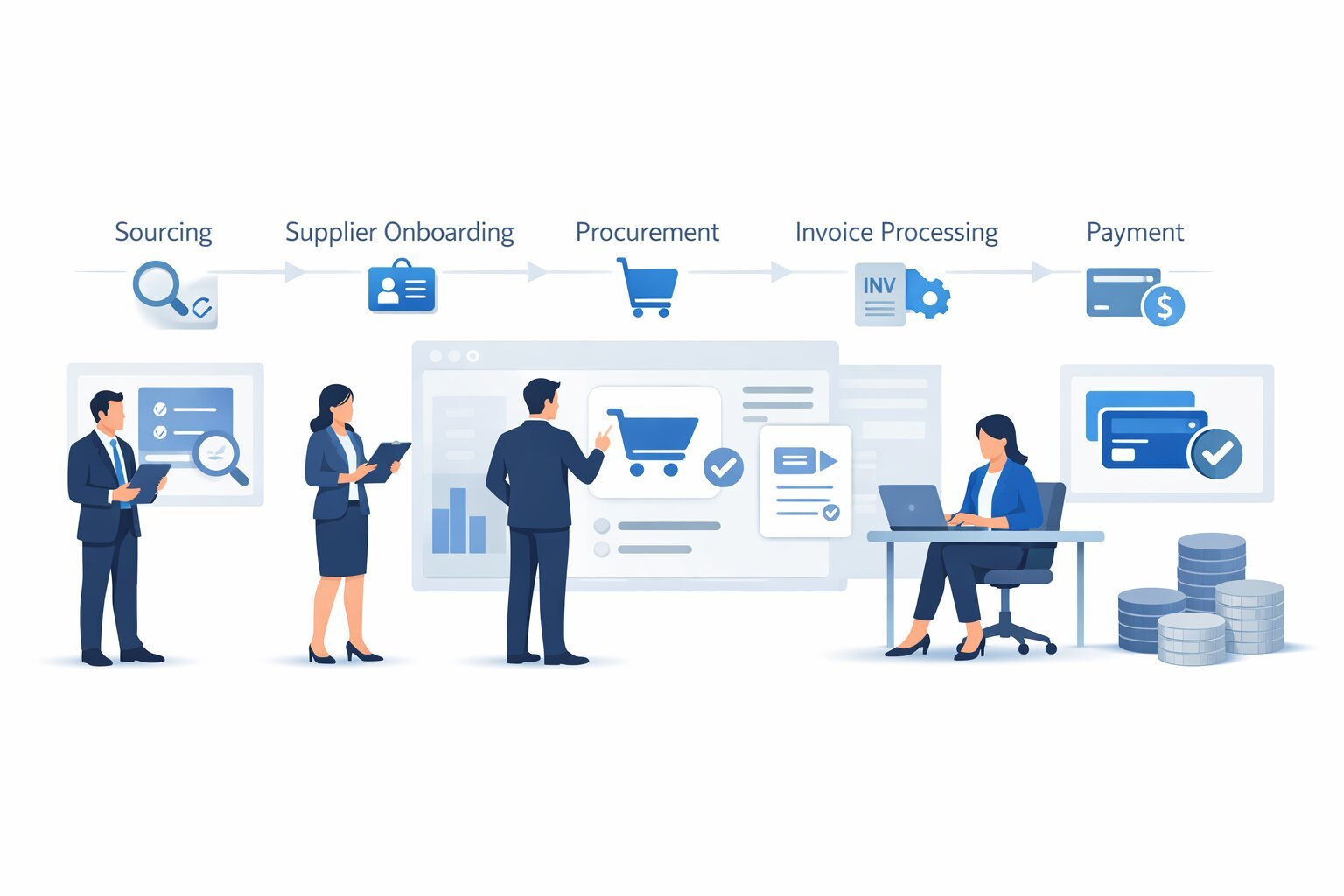
Modern procurement is no longer just about raising purchase requests and paying invoices. In many organizations, procurement now sits at the center of finance, compliance, supplier management, workflow automation, and digital operations. That is why the phrase Source to Pay ServiceNow is getting more attention. Businesses want one connected system that can move work from supplier sourcing to purchase fulfillment and invoice resolution without endless email chains, spreadsheets, and disconnected tools.
In simple terms, Source-to-Pay Operations in ServiceNow is designed to streamline the end-to-end process of sourcing suppliers, onboarding them, managing procurement activity, handling purchase orders, and supporting invoice and payment-related workflows in a more unified way. ServiceNow describes it as a solution that automates and simplifies the source-to-pay process, supports collaboration across teams, and integrates with existing ERP and procurement technologies.
For companies focused on digital transformation, this matters beyond procurement alone. A modern Source to Pay model improves operational visibility, reduces manual delays, creates better supplier experiences, and gives teams a more structured workflow foundation. From a business systems standpoint, it is part of the wider move toward connected enterprise operations, where processes are not trapped inside isolated departments.
At a glance: Source to Pay ServiceNow helps organizations manage sourcing, supplier lifecycle, procurement workflows, invoice operations, and related collaboration in one connected operating model rather than across fragmented manual systems.
What Is Source to Pay in ServiceNow?

Source to Pay, often shortened to S2P, refers to the full journey that starts when a business identifies a need for goods or services and continues through supplier engagement, purchasing, invoice handling, and payment completion. In ServiceNow, this is not presented as a single narrow task. It is framed as a broader operational workflow that connects multiple procurement and finance activities in a unified system.
ServiceNow’s Source-to-Pay suite includes capabilities tied to sourcing and procurement operations, supplier lifecycle operations, and accounts payable operations. The platform also supports workspace-based collaboration, supplier interaction, AI-assisted workflows, and integration with ERP systems. In practice, that means an organization can manage supplier onboarding, sourcing requests, purchase-related activity, invoice exceptions, and supplier inquiries with more consistency and fewer manual handoffs.
A common point of confusion is the difference between procure-to-pay and source-to-pay. Procure-to-pay usually focuses more narrowly on requisition, purchasing, receiving, and payment. Source-to-pay is broader. It includes upstream work such as supplier selection, sourcing, supplier onboarding, and governance before the purchasing transaction is even completed. ServiceNow’s own material reflects this wider scope by combining sourcing, supplier lifecycle management, procurement, and invoice operations under the same Source-to-Pay umbrella.
Quick Reference: What Source to Pay ServiceNow Covers
| Area | What it includes in practical terms | Why it matters |
|---|---|---|
| Sourcing | Request handling, quote collection, supplier selection, negotiation support | Helps teams choose the right supplier instead of making rushed purchases |
| Supplier lifecycle | Supplier onboarding, supplier data, compliance, collaboration, risk and performance visibility | Improves supplier quality, data accuracy, and governance |
| Procurement operations | Shopping, requests, approvals, purchase-related workflows, fulfillment support | Reduces friction for employees and procurement teams |
| Accounts payable operations | Invoice intake, approvals, exception handling, inquiry resolution | Speeds invoice processing and reduces payment delays |
| Supplier collaboration | Portals, self-service, communication, case interactions | Improves supplier experience and reduces back-and-forth emails |
| ERP integration | Exchange of transactional and master data with finance/ERP systems | Keeps procurement workflows connected to core business systems |
The reason this structure matters is simple: many businesses already have an ERP, but they still struggle with fragmented processes around requests, approvals, supplier onboarding, invoice exceptions, and internal coordination. ServiceNow’s value proposition is not that it replaces every business system. It is that it helps coordinate the workflow layer around those systems more effectively.
What Is the Main Purpose of Source to Pay ServiceNow?
The main purpose of Source to Pay ServiceNow is to make procurement and supplier-related work faster, more visible, more controlled, and less manual. Instead of managing requests in one place, suppliers in another, invoices in email, and approvals in spreadsheets, organizations can orchestrate the process more consistently across teams. ServiceNow explicitly positions Source-to-Pay Operations as a way to simplify purchasing and case management, reduce errors and delays, and let procurement teams focus more on strategic priorities.
That purpose becomes more valuable as an organization grows. A small company can survive with manual approvals and scattered vendor records for a while. A large enterprise usually cannot. Once there are multiple departments, regions, suppliers, compliance requirements, and approval chains, disconnected procurement becomes expensive. Delays increase, supplier onboarding gets messy, invoice inquiries pile up, and teams lose visibility over where work is stuck.
From an implementation standpoint, the platform is useful because it connects operational work rather than forcing teams to chase updates manually. Procurement, finance, AP, supplier managers, legal, and business users can work from more structured workflows. That is often where the real business value appears: not in one flashy feature, but in the reduction of daily friction.
Why Businesses Use Source to Pay ServiceNow

1. To reduce manual procurement friction
One practical reason businesses adopt it is to reduce the amount of routine coordination work. ServiceNow’s procurement-related applications support self-service requests, workflow routing, and structured task handling. That means employees can request goods or services more easily, while procurement teams get a more manageable operating process.
2. To improve supplier onboarding and supplier data quality
Supplier lifecycle management is often one of the messiest parts of procurement. Missing documents, inconsistent vendor records, and unclear ownership create delays before the first purchase even happens. ServiceNow’s Supplier Lifecycle Operations is built around onboarding, collaboration, risk, compliance, and performance visibility across the supplier lifecycle.
3. To manage invoices and exceptions more efficiently
Invoice processing is rarely smooth when it depends on scattered email threads and manual review. ServiceNow’s Accounts Payable Operations supports invoice processing, approvals, duplicate detection, PO and goods receipt matching, exception management, and inquiry handling. That makes it relevant for organizations trying to reduce payment bottlenecks.
4. To integrate workflow with ERP rather than work around it
Many companies already rely on ERP systems, but their procurement experience still feels disconnected. ServiceNow documents describe an ERP Integration Framework for Source-to-Pay and note support for transactional and master data exchange, including purchase orders, receipts, invoices, fixed assets, tax information, and even multi-ERP scenarios.
5. To create a better supplier and employee experience
A good procurement process is not only about internal control. It is also about usability. ServiceNow’s supplier collaboration capabilities include self-service, portal-based interaction, inquiry submission, and task completion support for suppliers. That matters because poor supplier communication often becomes an operational problem long before it becomes a finance problem.
Where Is Source to Pay ServiceNow Used?
Source to Pay ServiceNow is mainly used in mid-sized to large organizations, especially those with complex purchasing activity, many suppliers, compliance obligations, or multiple departments that need coordinated procurement workflows. It is particularly relevant where procurement touches finance, supplier management, legal review, case handling, and enterprise automation.
Here are the most common environments where it fits well:
| Business environment | How Source to Pay ServiceNow is used |
|---|---|
| Enterprises with many suppliers | To onboard suppliers, manage records, route approvals, and track procurement workflows |
| Multi-department organizations | To standardize how different teams request, review, and buy goods and services |
| Finance-heavy organizations | To improve invoice management, approvals, exception handling, and supplier inquiries |
| Compliance-sensitive industries | To strengthen governance, supplier documentation, auditability, and policy adherence |
| Companies with existing ERP systems | To add better workflow orchestration and user experience around ERP-driven procurement |
| Organizations pursuing digital transformation | To replace scattered manual processes with structured enterprise workflows |
In practice, this can include manufacturing groups, healthcare organizations, education systems, business services firms, government environments, and enterprise retail operations. The common pattern is not the industry alone. It is the presence of process complexity, approval dependency, and supplier interaction overhead.
For a website, web application, or digital operations audience, this is especially relevant because Source to Pay is really a workflow design problem as much as a procurement problem. The same operational thinking that improves website performance or ecommerce systems also applies here: remove friction, standardize flow, reduce handoff delays, and improve visibility.
How the Source to Pay Workflow Usually Works in ServiceNow

Although every organization configures the process differently, the general workflow follows a recognizable sequence.
1. A business need is identified
A team or employee needs a product, service, supplier, or contract-related purchase. This begins the request lifecycle. In a more mature setup, that request is captured through a structured intake rather than email or informal messaging.
2. Procurement or sourcing reviews the request
The procurement team reviews requirements, checks policy alignment, and determines whether to purchase from an existing source, request quotes, or start a sourcing process. ServiceNow’s sourcing and procurement tooling is meant to support these request and fulfillment workflows.
3. Supplier sourcing or selection happens
If a supplier must be selected, the organization can move through quote collection, evaluation, and award decisions. A ServiceNow community example describing an end-to-end Source-to-Pay flow lists purchase request creation, negotiation, quotation gathering, supplier award, supplier onboarding, purchase order creation, goods receipt, invoice processing, and payment. While that community answer is not formal product documentation, it matches the broader workflow model reflected in ServiceNow’s official S2P materials.
4. Supplier onboarding and validation take place
Before business can proceed smoothly, the supplier often needs to be onboarded properly. This may involve collecting business details, tax documents, compliance records, contacts, and approvals. ServiceNow provides supplier onboarding playbooks and supplier lifecycle features specifically for this stage.
5. Purchase orders and fulfillment are managed
Once the supplier and buying path are approved, purchase orders and related procurement records move through the system. ServiceNow’s documentation describes purchase orders as binding contracts that include descriptions, quantities, prices, discounts, payment terms, delivery dates, and related terms.
6. Invoices are received and processed
After delivery or service completion, invoices must be processed. Accounts payable teams may review invoice data, match it to purchase orders and receipts, approve it, or handle exceptions. ServiceNow’s Accounts Payable Operations supports invoice ingestion through approval and exception handling.
7. Payment-related issues and supplier inquiries are resolved
The process does not end at invoice entry. Real operations involve inquiries, disputes, duplicate checks, missing data, and communication with suppliers. ServiceNow supports invoice inquiry case handling and supplier collaboration workflows to keep these issues visible and manageable.
Example Scenarios
Example 1: A company needs a new software vendor
An internal team requests a new SaaS tool. Procurement reviews the request, checks policy requirements, and involves sourcing to compare suppliers. The selected vendor is onboarded with the necessary details and approvals. A purchase order is issued, the invoice is reviewed by AP, and payment-related follow-up is tracked through structured workflow rather than scattered email.
Example 2: A manufacturer buys office and operational supplies
Employees need a simple way to request approved products without involving procurement for every low-complexity purchase. ServiceNow’s self-service procurement model can help standardize ordering while still applying rules, routing, and visibility. Procurement gets fewer ad hoc emails, and employees get a cleaner purchasing experience.
Example 3: A finance team struggles with invoice exceptions
The AP team receives many invoices that do not match records cleanly. Duplicate invoices, missing receipt data, and unclear approvals cause payment delays. ServiceNow’s AP-focused capabilities are relevant here because they support invoice approvals, exception management, duplicate identification, and inquiry handling.
Example 4: A large enterprise works across multiple ERP systems
A business operating in several regions may have more than one ERP environment. ServiceNow’s Source-to-Pay framework documents support for integration across multiple ERP instances and data flows involving purchase orders, receipts, invoices, and related information. That makes it useful where process standardization is needed even though backend systems differ.
Key Benefits of Source to Pay ServiceNow
| Benefit | What it looks like in practice |
|---|---|
| Better process visibility | Teams can see where requests, supplier tasks, approvals, and invoice cases are stuck |
| Faster cycle times | Less manual chasing means fewer avoidable delays |
| Stronger supplier management | Onboarding, records, collaboration, and lifecycle activity become more structured |
| Improved AP efficiency | Invoice review, exception management, and inquiry handling become easier to manage |
| Better employee experience | Self-service shopping and request submission reduce friction |
| ERP-connected operations | Workflow and user experience improve without abandoning core finance systems |
| Lower error risk | Structured workflows help reduce missing data, duplicate work, and inconsistent handling |
In practice, the benefit is often cumulative. One automation by itself may not transform procurement. But when request intake, supplier onboarding, collaboration, invoice handling, and ERP-connected workflow all improve together, the operating model becomes far more stable.
Common Terms You Should Understand
Source to Pay
The full procurement lifecycle, from identifying and sourcing suppliers through purchasing, invoicing, and payment support.
Procure to Pay
A narrower process focused more directly on requisition, purchasing, receiving, and payment. ServiceNow’s “what is procure to pay” description reflects this transaction-centered view.
Supplier Lifecycle Operations
The ServiceNow application area focused on supplier onboarding, collaboration, risk, compliance, and performance visibility. (ServiceNow)
Sourcing and Procurement Operations
The part of the ServiceNow suite aimed at helping employees request and purchase goods or services through more structured, often self-service procurement workflows.
Accounts Payable Operations
The ServiceNow capability focused on invoices, approvals, exceptions, duplicate checks, and supplier inquiries.
ERP Integration Framework
A ServiceNow framework for exchanging procurement and finance-related data with third-party ERP systems, including support for transactional and primary data.
Common Mistakes Businesses Make
Treating Source to Pay as only a purchasing tool
A common issue is assuming S2P begins when someone clicks “buy.” In reality, many delays and risks come earlier, during sourcing, supplier validation, and approval design. If these upstream steps are ignored, the buying process still remains messy.
Ignoring supplier experience
Companies often focus on internal efficiency and forget that suppliers also need a usable experience. When supplier communication is poor, invoice resolution slows down, documents go missing, and onboarding takes longer. ServiceNow’s supplier portal and collaboration features exist because supplier-side usability matters.
Failing to plan ERP integration properly
Another mistake is treating integration as an afterthought. If procurement workflow is improved but master data, invoices, receipts, or PO records remain poorly connected to ERP, teams end up doing reconciliation work manually. ServiceNow’s ERP framework exists for a reason: process automation needs connected data.
Over-customizing before process clarity
Organizations sometimes want to automate everything immediately. A better approach is to define the real workflow problems first. Where are requests delayed? Which supplier steps cause friction? What invoice exceptions occur most often? Good implementation usually starts with operational clarity, not only technical configuration.
Best Practices for Implementation
- Map the real workflow before platform design.
Start by identifying where requests originate, who approves them, how suppliers are onboarded, where invoice exceptions appear, and which systems hold the source data. Without this, automation can simply digitize confusion. - Standardize intake and approval logic early.
For most businesses, request inconsistency is one of the biggest causes of delay. Clear intake categories, approval rules, and ownership boundaries make the later workflow much smoother. - Prioritize supplier data quality.
Clean supplier records matter because bad master data creates downstream issues in purchasing, invoices, reporting, and compliance. Supplier lifecycle design should not be treated as a side task. - Use self-service where it genuinely reduces friction.
Employees should not need procurement intervention for every routine purchase. Where policy allows, self-service improves speed and adoption. ServiceNow’s procurement experience is designed with this in mind. - Build for exception handling, not only the happy path.
Real procurement work includes invoice mismatches, missing documents, supplier questions, urgent approvals, and policy exceptions. A strong S2P setup handles these cases visibly instead of pushing them back into email. - Keep ERP integration in scope from the start.
One practical way to approach this is to decide early which records stay authoritative in ERP and which workflows are best orchestrated in ServiceNow. That reduces later confusion over ownership and synchronization.
Source to Pay ServiceNow vs Traditional Manual Procurement

| Traditional approach | Source to Pay ServiceNow approach |
|---|---|
| Requests arrive through email, chat, spreadsheets | Requests follow structured workflows |
| Supplier onboarding is inconsistent | Supplier lifecycle tasks are more standardized |
| Approvals are hard to track | Approval routing and task ownership are clearer |
| Invoice issues live in inboxes | AP cases and exceptions are managed more visibly |
| Suppliers depend on ad hoc communication | Supplier collaboration can be portal-based and more self-service |
| ERP exists but user experience is fragmented | Workflow layer connects teams around ERP systems |
For many organizations, this comparison is where the real business case becomes obvious. The problem is rarely the existence of procurement. The problem is how badly the process behaves under real operating pressure.
Why This Topic Matters for Digital Operations and Business Websites
At first glance, Source to Pay may look like a procurement-only topic. But it also belongs in broader conversations around workflow design, digital transformation, enterprise web platforms, process automation, and operational performance. Businesses that invest in website quality, ecommerce systems, internal portals, and workflow-driven applications are usually solving the same larger problem: reducing friction across complex user journeys.
That is why Source to Pay ServiceNow is relevant to digital growth and web-focused business strategy. It shows how modern organizations are shifting from disconnected back-office tasks to integrated operating experiences. The same principles that improve a customer-facing platform often improve internal procurement operations too: better UX, cleaner workflows, fewer handoffs, stronger integrations, and more visibility.
6. FAQs
1. What does Source to Pay ServiceNow mean?
Source to Pay ServiceNow refers to ServiceNow’s workflow-driven approach to managing the end-to-end procurement journey, including sourcing, supplier onboarding, purchasing activity, invoice operations, and related collaboration. It goes beyond simple buying because it also covers upstream supplier and sourcing work. The goal is to reduce manual effort and improve coordination across procurement, finance, and supplier-facing teams. It is especially useful in organizations where multiple stakeholders are involved in approvals and vendor processes.
2. Is Source to Pay the same as Procure to Pay in ServiceNow?
Not exactly. Procure to Pay usually focuses more on requisition, purchasing, receiving, and payment. Source to Pay is broader and includes sourcing and supplier lifecycle activity before the purchasing transaction is completed. In practical terms, source-to-pay covers more of the strategic and supplier management side of procurement. ServiceNow’s own product structure reflects that wider scope.
3. Which ServiceNow products are involved in Source to Pay?
The main areas include Sourcing and Procurement Operations, Supplier Lifecycle Operations, and Accounts Payable Operations. Depending on the setup, supplier portal and AI-assisted features can also be part of the overall solution. These components work together to support request handling, supplier management, invoice workflows, and case resolution. The exact configuration depends on business needs and licensing.
4. Can ServiceNow Source to Pay work with ERP systems?
Yes. ServiceNow documents describe an ERP Integration Framework for Source-to-Pay that supports data exchange with third-party ERP systems. This includes primary data and transactional data such as purchase orders, receipts, and invoices. ServiceNow also documents support for multi-ERP scenarios in some procurement objects. That makes it relevant for enterprises that already rely on established finance systems and do not want a disconnected procurement workflow layer.
5. Where is Source to Pay ServiceNow most useful?
It is most useful in organizations with complex procurement, large supplier networks, structured approval requirements, or frequent invoice exceptions. Mid-sized and enterprise businesses tend to gain the most because process fragmentation becomes more expensive as scale increases. It is also valuable where procurement touches finance, compliance, supplier collaboration, and internal service workflows. In simpler businesses with very limited purchasing complexity, a lighter process may sometimes be enough.
6. Does Source to Pay ServiceNow help with supplier onboarding?
Yes. Supplier onboarding is one of the key use cases. ServiceNow’s Supplier Lifecycle Operations includes onboarding workflows, supplier collaboration, compliance visibility, and lifecycle management features. There are also playbooks and supplier portal capabilities designed to make onboarding more structured and less dependent on manual coordination. This is important because poor onboarding often causes downstream procurement and payment delays.
7. How does ServiceNow help with invoice problems in Source to Pay?
ServiceNow’s Accounts Payable Operations is designed to support invoice processing, approvals, duplicate detection, PO and goods receipt matching, exception management, and supplier inquiries. That means it helps teams deal with real-world invoice problems instead of only capturing invoice records. From an operational standpoint, this matters because AP delays are often caused by exceptions, mismatches, and unresolved questions rather than by the invoice itself. A more visible case-based workflow can improve turnaround and accountability.
8. Is Source to Pay ServiceNow relevant for digital transformation projects?
Yes, very much. Even though it is procurement-focused, it reflects the broader digital transformation goal of replacing disconnected, manual, department-based work with integrated workflows and better user experiences. It also fits organizations that want internal portals, self-service, cleaner process governance, and better system integration. In that sense, it is as much an operational design improvement as it is a procurement tool. If a business is trying to modernize how work moves across teams, Source to Pay fits naturally into that strategy.